VISUAL ESSAY / TRAFFIC FLOW

Macroscopic Fundamental Diagram and Perimeter Control

FILM INDEX / JUMP TO AN ACT
FIELD GUIDE

Guarding the City's Pulse

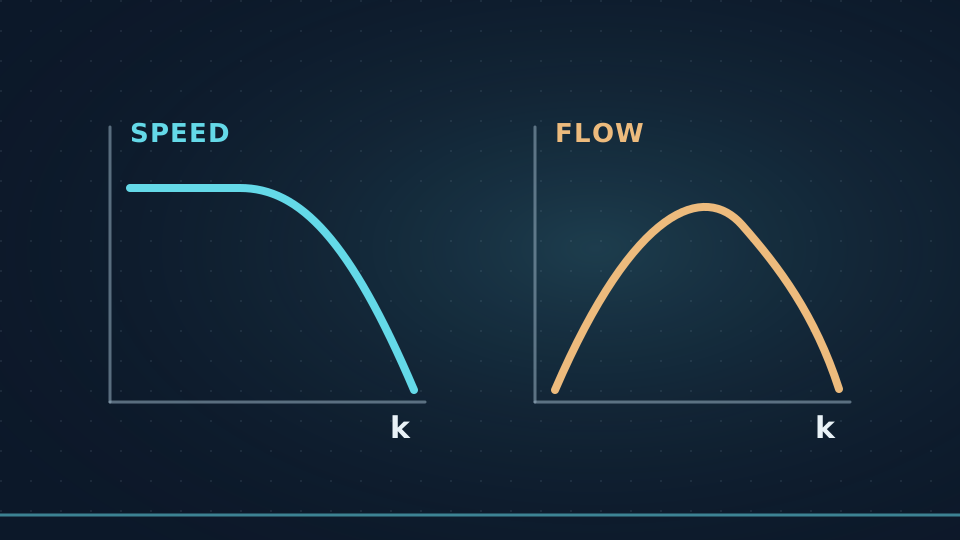
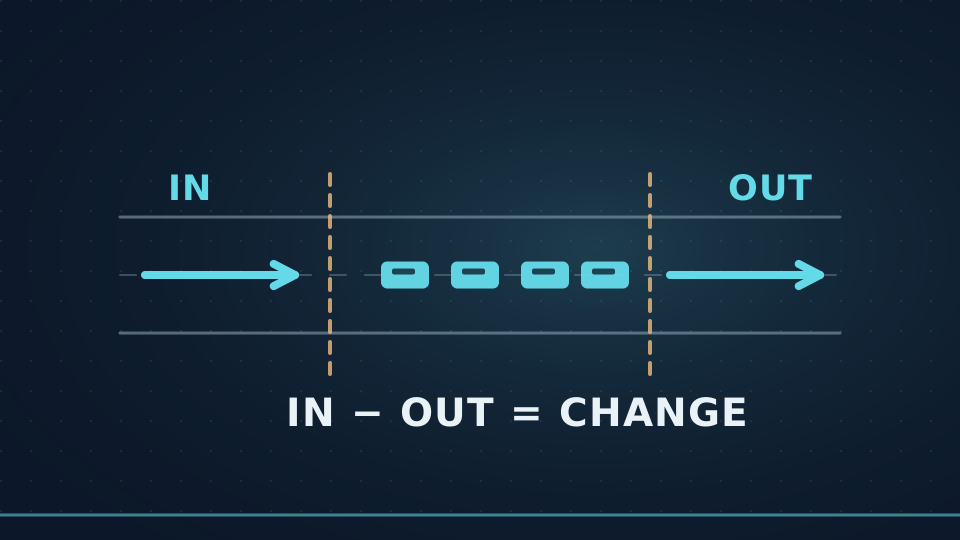
An urban district can move many vehicles when its streets are moderately occupied, yet become much less productive when queues spill through intersections. The macroscopic fundamental diagram summarizes that region-wide tension between traffic accumulation and completed movement.

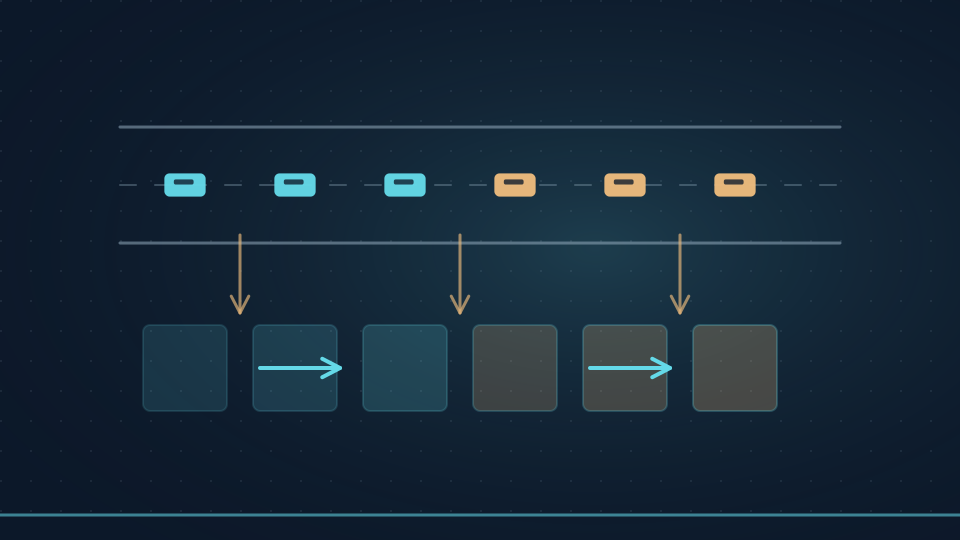
The first act allows demand to rise on a grid until the interior becomes crowded. The next act meters vehicles entering the district, using current conditions to keep accumulation away from the most damaging range. Both runs use the same underlying demand and road network; the comparison asks whether admitting fewer vehicles now can let more trips finish over time. Highlighted perimeter signals show where the intervention acts, while the cumulative completion plot shows its system-level consequence. The insight is counterintuitive but operationally important: unrestricted entry can reduce a network's ability to serve traffic. A well-timed boundary control can protect that ability, even though some travelers wait outside.